
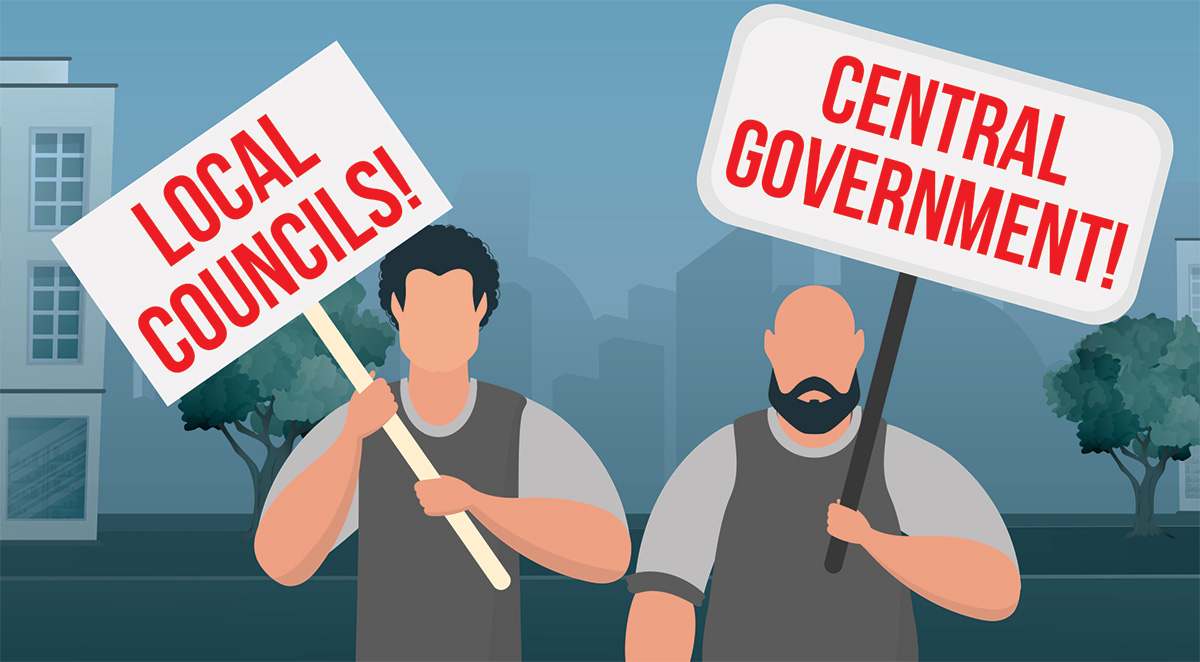
Local reform initiative, Headstart, aims to strengthen the role of councils in the governance of their communities. Peter McKinlay, Director, Local Governance Think Tank, elaborates on how Headstart can establish collaborative governance across districts and empower communities to have an effective voice on whether council and government services are fit for purpose.
It is nearly 40 years since Roger Douglas effectively defined local government as an instrument of central government policy with no reference to, or understanding of, local governments’ governance of their communities.
Much has gone wrong. For the most part, councils are management controlled – not so much because management has conspired to take control but rather as a natural outcome of the complex accountability and compliance requirements central governments have imposed.
Councils’ priorities are set more by whichever government is in power rather than by the communities to which they are nominally responsible. Too often the relationship between councils and their communities is almost adversarial.
Successive governments have treated local government almost with contempt and displayed very little understanding of local government’s proper role.
Headstart is the opportunity to change this by rebuilding local government relationships with their communities and with the key stakeholders, who in practice, are also part of the governance of a council’s district or region.
Headstart is a classic manifestation of how central governments have approached local government.
Never mind the evidence, don’t bother to understand likely consequences, just charge ahead and impose their own views to meet their own objectives regardless of the impact on councils and their communities.
However, it is also an extraordinary opportunity. Intentionally, or otherwise, the Headstart guidelines invite councils to determine the role they want to play in the direction of their communities.
In an ideal world, councils would be given sufficient time to research and consult widely on what makes for the best governance of their communities and district. The rush to comply is putting the necessary first principles approach at risk in favour of building on the status quo.
Even at elected member level many councils have interpreted the guidelines as almost some kind of ‘tick the box’ exercise establishing conventional structures within the current provisions of the Local Government Act.
Others are looking further afield. How and why is local government evolving in other jurisdictions? What is the understanding of governance? What is the place of communities?
What they are finding is a very different understanding of local government governance. There is an increasing shift from the traditional, centralised top-down government approach to more of a bottom up, community-based approach.
Central governments still have a significant role to play but the balance in governance, and the power of councils, is very different from usual New Zealand practice. Headstart has highlighted the lack of strong regional governance. Too many decisions default to Wellington.
There is strong evidence that without strong regional governance New Zealand will not escape from its poor productivity performance.
Why? Because centralising decision-making in Wellington makes it virtually impossible to gain the kind of alignment at regional level needed to stimulate growth.
The classic example, referenced by the OECD, is the importance of being able to align education and labour force development at regional level. That can’t be done here. Control over decisions on education offerings, however simple, is held centrally.
Futhermore, there is increasing recognition that the effective design, targeting and delivery of major services must be done in conjunction with the communities where those services are delivered.
Doing things in conjunction with communities means councils need to know where their communities are and who they are so they can build ongoing relationships to shape and ensure the delivery of services (whether by councils or by central government) to best meet local need.
Councils need to learn that working with communities has substantial benefits as councils can tap into community knowledge about what works best in their place and what priorities really matter.
The bigger opportunity for reshaping the role of local government is with the governance of the district as a whole. This goes to the heart of understanding what governance is about. It’s more than managing service delivery across a range of council (or central government) functions.
Local governance is partly about strengthening communities. Another, and complementary part, comes from recognising governance of district is exercised by council together with other key stakeholders whose activities have a significant impact on community outcomes. These can include education institutions, hospitals, ports, airports, major businesses, iwi and more.
Most councils will be aware of the extent to which control of the local economy has shifted away from local interests to national or international interests with little or no commitment to the community as such.
Headstart is a chance to work with key stakeholders on how they, and the council, can work together to take back control of the local economy, now known elsewhere as community wealth building.
This is not asking other stakeholders to compromise on how they undertake their activity.
Rather, it is asking them to focus on choosing options which improve community outcomes and strengthen local control over the local economy and what happens to locally generated capital.
Headstart can be used to embed a practice of collaborative governance, strengthening the relationship between local government and key stakeholders and significantly changing the nature of the relationship with central government.
A practice of collaborative governance can also be effective in building a broad-based approach to countering random central government interventions by increasing the political cost to governments seeking to ride roughshod over local government.
Finally, Headstart is an opportunity to reshape the nature of governance putting local government – in collaboration with its communities and key stakeholders – much more in control.
Importantly, this is a once in a generation opportunity. If everyone encourages their councils to use this creatively, there is every possibility of setting local government on a course to be the pivotal level of governance it should be.