
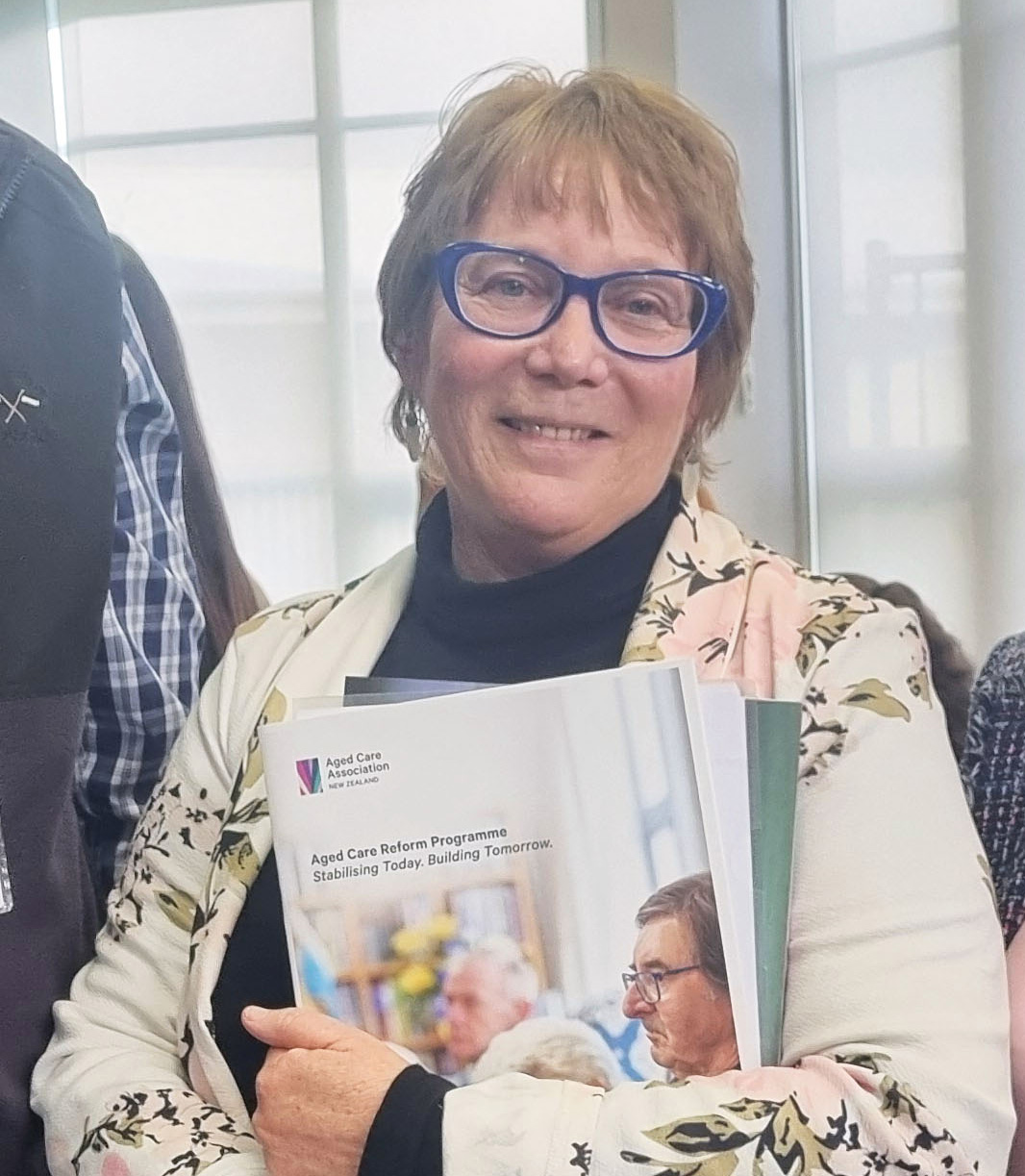
There is nothing ‘retiring’ about Tracey Martin.
The chief executive of the Aged Care Association of New Zealand was full of vigour and determination when sharing her vision for aged care in New Zealand at the Grey Power Federation AGM in June.
Having spent a year largely explaining ‘residential care’, where it is at now and where it is heading, she emphasised that residential care was NOT retirement villages.
“I don’t represent retirement villages. I fight for those who are assessed for rest home, hospital and dementia or psychiatric care. The New Zealand system has not kept up with needs.”
Stressing that hospitals did not want people who were dying – “they can’t do anything for them” – she added there were about 10,000 hospice beds but these were overwhelmed and the 40,000 residential care beds available were not enough.
“Most people don’t choose to go into residential or hospital care unless they need it but one in five over the age of 85 will need it and it has to be there. The fact is, we require a system which supports it [the need]. Aged care is health care!”
Despite acknowledging there were not enough beds to meet care demand, Ms Martin added that most Kiwis would not need that form of care; some would need home care but all factions were fighting for government support.
Adamant that the Government was under-funding aged residential care, she felt this was one reason why care organisations could not break even. “If aged care fails, the health system fails. When care becomes invisible, it is easy to ignore and to undervalue.”
 Ms Martin reminded delegates that the over 65’s were the largest and most reliable voting group in New Zealand.
“If they decide that access to care matters then reform is unavoidable. [NZ seniors] are New Zealands most powerful health lobbyists.”
Unyielding in her view that the burden of aged care had shifted from the State to families, and that families were putting pressure on spouses to be carers, Ms Martin said it shouldn’t be that way especially as access to respite care was limited. While wanting to see allocated respite beds in every town, she said there was no budget-line for respite or day programmes for seniors including those not suffering from dementia.
Determined to ensure the need for care is seen and that carers are valued, this fierce health advocate said the Government must address core issues such as:
- Restoring bed capacity for seniors living solely on the New Zealand Superannuation.
- Earlier support for families and spouses
- Building enough care for the future
She urged members to write to and meet with their local MPs on the issue and said, “don’t feel sorry for the Government; there are lots of ways to raise money not just by taxing workers.”
Ms Martin asked Grey Power to make this an election priority stating that if the issue was not heard locally, it would not be a priority nationally.
“Multiple voices equate to political weight. The 65 plus population will increase by 44% in the next 10 years; over 85s will double in the next 10 years.
“Don’t wait for permission to lead the change. We need the right care in the right place at the right time.
“One system, one purpose, one community working together for senior New Zealanders and their families. The system we build today is the one we’ll depend on tomorrow.”