
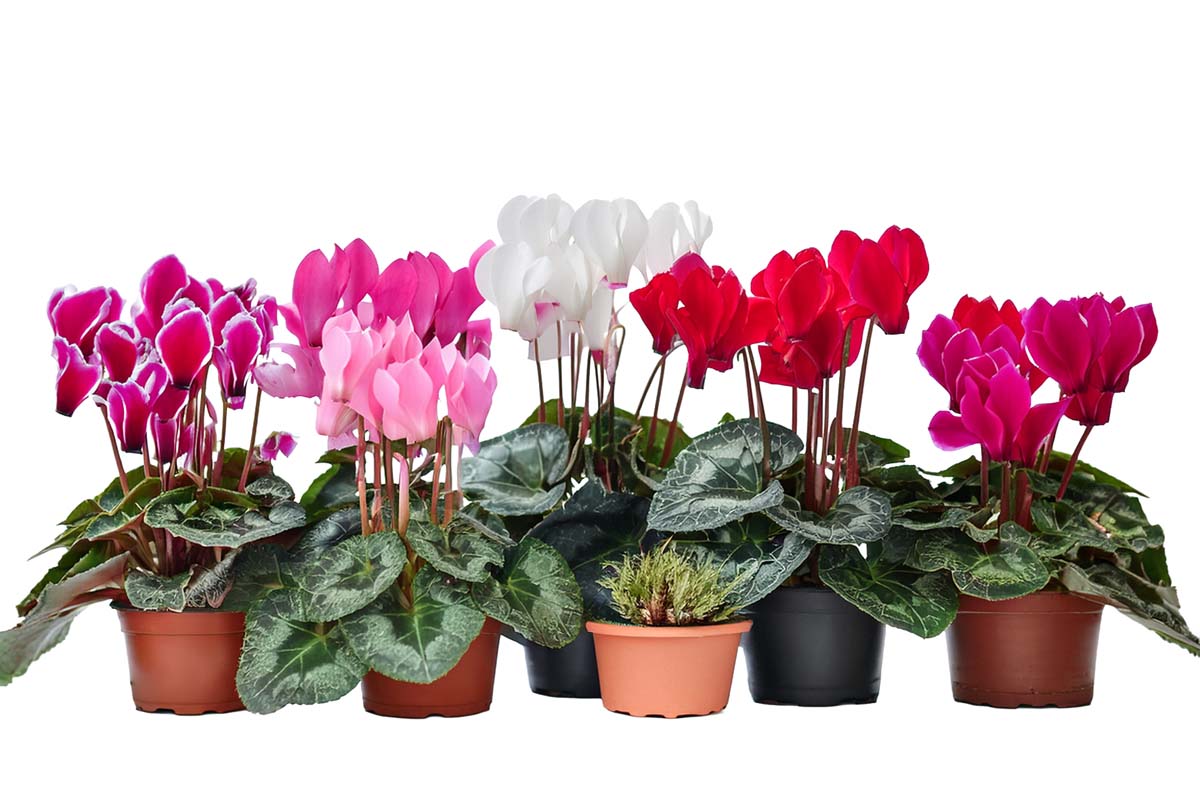
Mother’s Day 2026 is well behind us but it is likely many Grey Power members may have a potted cyclamen blooming brightly – a Mother’s Day gift given with love.
And that’s very appropriate as this lovely plant, known for its heart-shaped leaves and upward petals has long been associated with love, fertility and medicine.
Of course, cyclamen is not just one particular plant! A member of the primrose family, Primulaceae, the genus Cyclamen contains some 25 species of low-growing, herbaceous perennials, mainly native to countries within the Mediterranean Basin.
Dormant during most hot summers, cyclamens emerge in autumn or winter and can flower profusely for several months before dying back in spring. They grow indoors and out but the potted, indoor varieties are always popular especially when there is little yard space for a garden.
They thrive in humid conditions but not too hot. Keep soil slightly moist with room temperature water but do not over water. With proper care, plants can continue to flower for several years.
The name, cyclamen, derives from the Greek word kyklāmīnos (or kyklos), meaning “circle,” perhaps referring to the plant’s round, flat tuber. The ancient Greeks used the plant as far back as the first century for various ailments, including treating skin issues and as a remedy for poisonous bites.
The Greeks, and the Romans, believed cyclamen plants could serve as a charm to prevent evil spells and these were also considered a symbol of fertility, often linked to love and relationships.
Sometimes associated with the Virgin Mary’s bleeding heart, they are also said to symbolise modesty and humility. Interestingly, in Japanese culture, the cyclamen is considered a sacred flower for lovers.
It wasn’t until about the 16th century that cyclamens were introduced into Western Europe and were even cultivated in Queen Elizabeth I’s gardens. By the 17th century, they were popular in botanical collections and nurseries.
The popular houseplant Cyclamen persicum was heavily bred over the centuries to create the large, colourful varieties seen today and which many Kiwis favour as indoor plants.
In particular, they are loved for their vibrant blooms which add a cheerful note and a touch of colour on grey days.
Related: Blooming winter!