
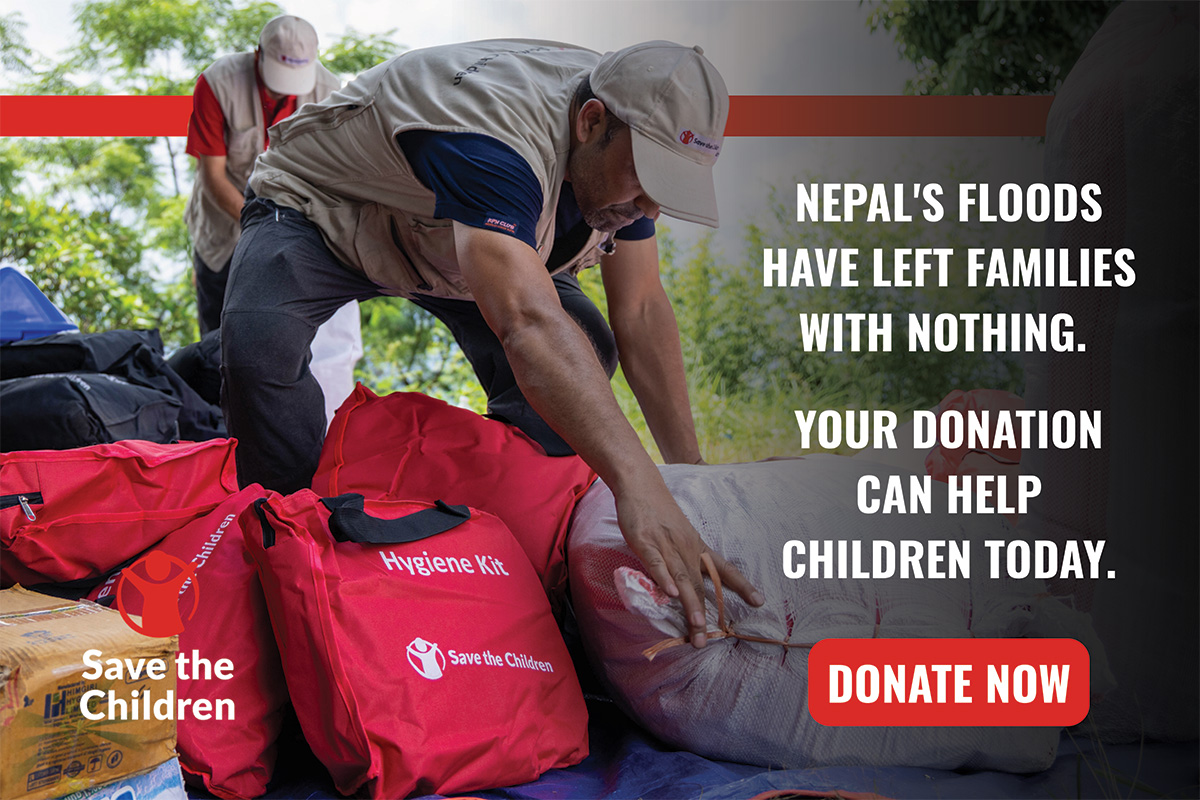
It has been more than two weeks since devastating flash floods tore through communities in Nepal’s Rasuwa and Nuwakot districts, leaving destruction on a scale few could have imagined. What began as reports of a glacier collapse high in the mountains has become one of the country’s deadliest recent disasters, with more than 1300 people confirmed dead and thousands more still missing.
As the immediate rescue effort continues, another crisis is emerging, one that receives far less attention but could have lasting consequences for an entire generation: the wellbeing of children.
Having lived and worked in Nepal for several years as Save the Children’s Country Director, I know these communities well. They are places of extraordinary resilience, but they are also places where children have already endured repeated shocks, from earthquakes and landslides to floods and economic hardship.
Today, many children are facing trauma that no child should have to experience.
Our teams have spoken to children who watched homes disappear beneath floodwaters, saw schools destroyed and remain separated from family members and friends. One 11-year-old girl told us her home and school were gone and that many of her friends were still missing. She said she is now afraid to sleep, worried another wall of water could come rushing down the mountainside.
These stories are heartbreaking, a reminder of how childhoods can be changed in an instant, and that recovery is about far more than rebuilding roads, homes and bridges.
Children need emotional support and a sense of safety if they are to recover from experiences like these. Adults can often process a disaster through experience and understanding. Children cannot. When homes vanish, schools close and families are uprooted, the predictable world they depend on disappears overnight.
At the same time, many children now face serious physical health risks.
Thousands of families are living in overcrowded temporary shelters where access to clean water and sanitation remains limited. Save the Children teams are seeing children suffering from coughs, fevers and respiratory infections, while contaminated water, unmanaged waste and stagnant floodwater are increasing the risk of diarrhoeal disease, skin infections and mosquito-borne illnesses such as dengue.
For children who have already survived the trauma of the floods, falling sick in the weeks that follow is an added burden they should not have to carry.
That is why humanitarian support must focus on more than immediate survival. Safe drinking water, healthcare, sanitation facilities and protection services are essential. Just as importantly, children need safe spaces where they can play, learn, reconnect with friends and begin to process what has happened. Save the Children has established child-friendly spaces and psychosocial support services because we know recovery depends on helping children heal emotionally as well as physically.
The decisions made in the coming weeks will shape the future of thousands of children. If we put children’s needs at the centre of the response, Nepal’s recovery can be stronger, healthier and more resilient. If we fail to do so, the impact of this disaster will be felt long after the floodwaters have receded.
Children must not be an afterthought in Nepal’s recovery. They must come first. Always and everywhere. To protect every childhood.