
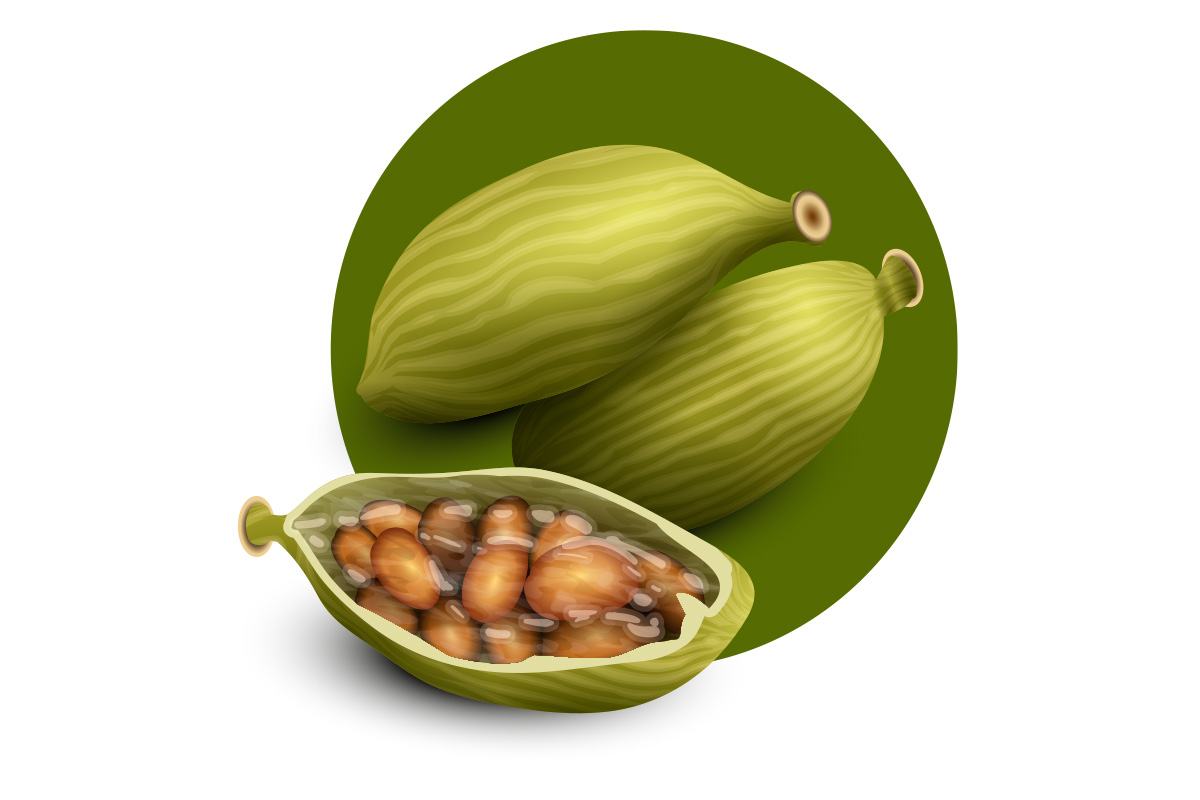
A number of aromatic spices come into play for desserts, baking and, of course, mulled wine. Today we take a look at cardamom.
The combination of sweet, floral, citrusy, and minty notes with a hint of spice and pungency make cardamon a cuisine favourite in many countries. That touch of fragrance can add sophisticated layers to both sweet and savoury dishes, from desserts and pastries to curries and coffee.
There are several types of cardamon, the two main varieties being: true or green cardamom from the species, Elettaria cardamomum; and black cardamom from the species, Amomum subulatum, also known as brown, greater, large, longer, or Nepal cardamom.
Black cardamom is aromatic and smoky, whereas green cardamom has a milder, sweet, herbal flavour which complements baked goods.
The name, cardamom blends the Greek words for “spice” and “cress” – ancient Greek physicians wrote about its therapeutic properties, identifying it as a digestive aid.
It was also appreciated by the Babylonians and Assyrians who recognised its trade potential and it remains a desirable ingredient in the cuisine of many Asian countries including India, Nepal and more. Used in curries as well as Indian sweets and spiced tea, today, India, Sri Lanka and Guatemala are major producers of cardamom.
During the 16th Century, the Portuguese entered the trade with the industry gaining European interest in the 19th century. However, earlier trade routes may well have been responsible for the movement of cardamom to countries beyond Asia.
In particular, green cardamon is a staple in Nordic countries where it is used in iconic sweet buns and breads such as the Scandinavian Yule bread Julekake, the Swedish, kardemummabullar sweet bun, Norwegian, Sjokoladeboller, sweet buns with chocolate, and Finnish sweet bread, pulla.
There are several theories as to how this Asian spice made its way so far north. Some attribute it to the Vikings visiting Constantinople; others say its introduction may have come from the Moors, who had Arab, Spanish, and Berber roots.
It seems that cardamom first appeared in a Scandinavian cookbook around 1450, the recipes almost identical to that of the Moors. So, it has been concluded that the Scandinavians were very heavily influenced by Moorish recipes and traditions at that time.
Whatever the case, cardamon (believed to be the third most expensive spice in the world) has become synonymous with Nordic Christmas celebrations where it is not only used in baked goods but also in mulled wine and seasonal beers.